There are moments when life looks completely normal from the outside. Work gets done. Roles are fulfilled. Days pass.
And yet, inside there is a tiredness that rest does not fully restore. A restlessness you can’t quite name. A quiet sense that you have been strong for a long time — but somewhere along the way, you lost contact with yourself.
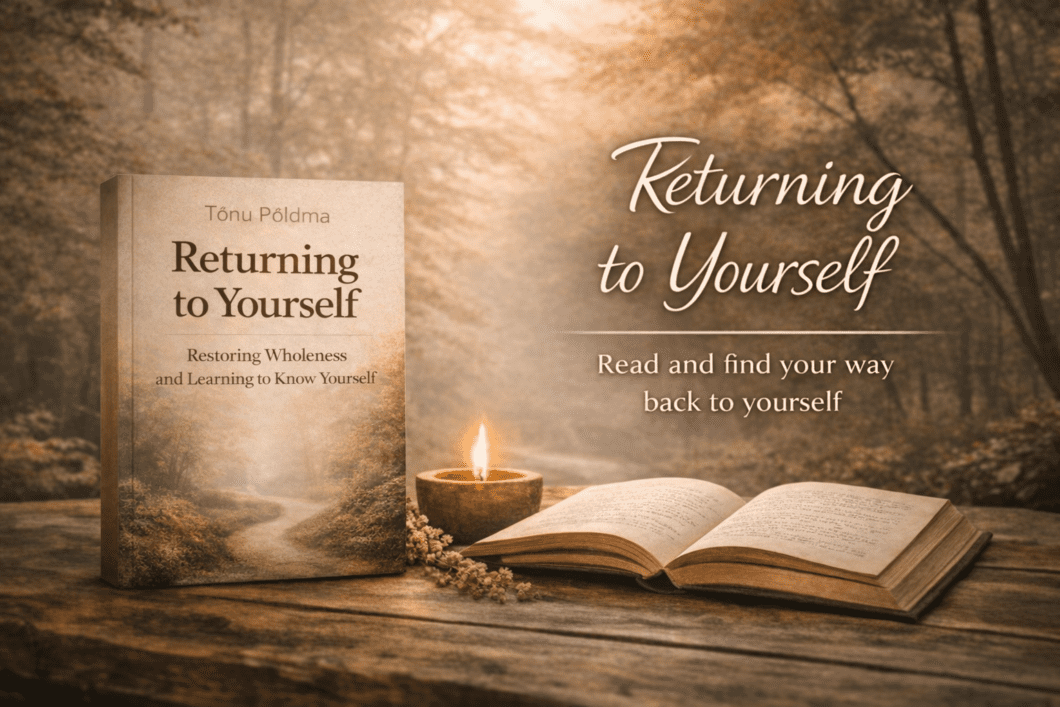
This is where the book Returning to Yourself begins. Not from crisis or collapse, but from a subtle inner signal that something essential is asking for your attention.
A book that doesn’t try to improve you
Author Tõnu Põldma does not write as a teacher or instructor. He does not offer methods, step-by-step systems, or quick solutions.
This book doesn’t ask: What should you do? It asks instead: Are you present with yourself?
Reading it can feel like someone is putting into words what you have long sensed but have not been able to express. The tone is simple, calm, and deeply human. There is no pressure to change — only an invitation to pause.
Fatigue and restlessness as signals, not flaws
The opening chapters stay with fatigue and inner unrest — not as problems to fix, but as messages to understand. Signs that you may have been away from yourself for too long.
Fatigue is not weakness here. It is a call back. Restlessness is not the enemy. It is a sign that your attention has been turned outward for too long.
This perspective is relieving. Nothing needs to be solved immediately. It is enough to begin listening.
When the heart knows before the mind
From there, the book turns toward listening — not only to the mind, but to the heart, the body, and your emotional signals. To a kind of knowing that comes from experience rather than explanation.
You begin to notice when something is truly right for you — and when it is not.
One of the central themes becomes clear: healing is not fixing — it is integration. Allowing your different parts to belong. Listening to feelings without judgment. Letting light and shadow exist together.
A quiet joy that needs no reason
As inner struggle softens, space begins to open. Space to breathe. Space to feel. Space to be.
The book speaks of joy not as an achieved peak state, but as something that can appear when resistance relaxes.
Not loud happiness. Not constant positivity. But a quiet sense that it is okay to be where you are — even if everything is not yet clear.
Being with others without losing yourself
An important part of the book explores relationships — how to be with others without constantly adjusting yourself away.
How to notice the moments where you have said “yes” at your own expense. How an honest “no” is not rejection, but self-respect.
There are no communication techniques taught here. Instead, the focus is on presence, dignity, and clarity — qualities that make relationships more real and grounded.
Returning — not to who you were, but to who you are
By the end, the circle gently closes. Returning to yourself does not mean going backward in your growth. It means reconnecting with what has remained underneath all roles, effort, and expectations.
This is not a book to rush through. It is a book to return to — especially in moments when you no longer want to fix yourself, but want to understand yourself.
If you read and recognize yourself in these pages, you are not broken. You are on your way back.
Explore the book Returning to Yourself here.
Take your time. Read slowly. Choose what feels true for you.